
The dynamism and diversity that the Kingdom of Saudi Arabia is witnessing currently is unmatchable. The Government’s giga-projects like NEOM and The Line have resulted in a substantial increase in the oil output of the nation. It has also resulted in increased labor participation, especially among women, higher home ownership rates, and developed sectors like tourism and real estate to impeccable levels.
A Vision Beyond Borders
When Vision 2030 was unveiled in 2016, it set forth a roadmap for reducing Saudi Arabia’s dependence on oil and diversifying its economy through innovation, tourism, renewable energy, and smart infrastructure. This Saudi futuristic city, conceived as a cornerstone of this vision, encapsulates the Kingdom’s drive to build a world-class model city that thrives on technology and sustainability.
Stretching across 26,500 square kilometers in northwestern Saudi Arabia, this mega-development aims to combine cutting-edge design, renewable energy systems, and advanced digital connectivity. It symbolizes more than a physical transformation it reflects a mindset shift toward global competitiveness and future readiness.
The Pillars of Innovation and Sustainability
The foundation of NEOM rests on two key pillars: innovation and sustainability. From carbon-neutral urban planning to autonomous mobility solutions, every aspect of this project is engineered to minimize environmental impact while maximizing human well-being.
One of its flagship projects, The Line, is envisioned as a linear city with no cars, no streets, and zero emissions powered entirely by renewable energy. It will house millions of residents while preserving 95% of the surrounding natural landscape. This integration of nature and technology represents a powerful statement about Saudi Arabia’s commitment to redefining urban living.
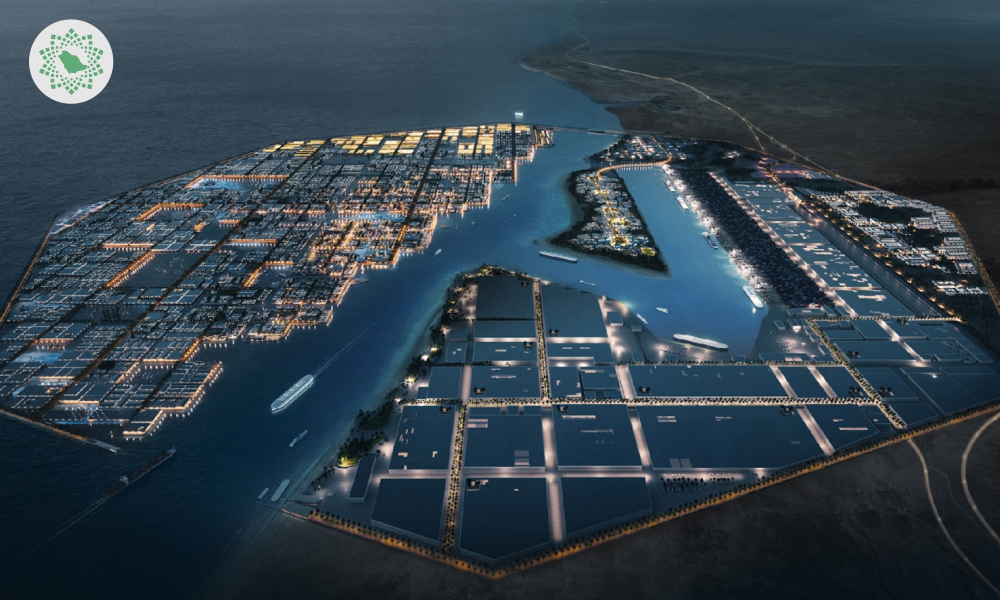
Alongside The Line, other developments like Oxagon (a floating industrial city), Trojena (a year-round mountain tourism destination), and Sindalah (a luxury island getaway) highlight how innovation, ecology, and lifestyle converge to build a holistic model of progress.
Catalyzing Economic Diversification
Vision 2030’s success relies on transforming Saudi Arabia into a global investment powerhouse, and Vision 2030 City is central to that mission. The project is designed to attract international investors, entrepreneurs, and innovators by offering world-class infrastructure, streamlined regulations, and access to advanced technologies.
Its economic impact extends across multiple sectors: renewable energy, biotechnology, manufacturing, and tourism. By creating high-value job opportunities and encouraging knowledge transfer, it fosters a dynamic ecosystem where Saudi talent can thrive alongside global expertise.
Furthermore, the development’s focus on smart industries and artificial intelligence aligns perfectly with the Kingdom’s ambition to lead in the digital economy. The result is a diversified, resilient economic landscape less vulnerable to oil price fluctuations and more attuned to global sustainability trends.
Social Transformation and Empowerment
Beyond economic growth, Vision 2030 emphasizes social progress and inclusivity. Projects like NEOM are not only reshaping skylines but also redefining how communities live, work, and interact.
The initiative promotes gender inclusion, education, and entrepreneurship, empowering citizens to participate in building a modern, knowledge-based society. It embodies a vision where opportunity is accessible to all, driven by merit, creativity, and collaboration.
This social evolution is visible in the Kingdom’s cultural renaissance, with increased investment in entertainment, arts, and sports. The rise of smart, sustainable communities mirrors a broader national narrative, one that values human potential as the greatest resource of all.
A Global Model for Smart Living
As the world grapples with the challenges of urbanization and climate change, NEOM offers a visionary response. It integrates advanced infrastructure, green technologies, and artificial intelligence to create living environments that are adaptive, efficient, and harmonious with nature.
Through digital twin systems, predictive analytics, and renewable power networks, it aims to achieve unprecedented levels of sustainability. This fusion of technology and ecology positions Saudi Arabia as a thought leader in the global conversation about the future of cities.
Moreover, the project serves as a magnet for collaboration with international researchers, architects, and innovators. It’s not merely a Saudi project; it’s a global experiment in reimagining human habitats for generations to come.
Challenges and the Road Ahead
Transforming such an ambitious vision into reality comes with challenges, logistical, environmental, and financial. Large-scale projects require continuous adaptation, transparent governance, and community engagement to ensure long-term success.
However, Saudi Arabia’s commitment to its Vision 2030 goals, supported by robust leadership and strategic partnerships, provides a strong foundation. The nation’s youth, empowered by education and technology, remains the driving force behind this transformation. Their energy, creativity, and optimism are shaping the Kingdom’s future from the ground up.
Conclusion
Ultimately, the Saudi Innovation Hub and Vision 2030 symbolize a powerful convergence of ambition and action. Together, they mark the dawn of a new Saudi Arabia, one that values innovation as much as tradition, progress as much as sustainability, and people as much as profit.
This is more than an infrastructure project or an economic reform plan. It is a statement of belief, a declaration that the Kingdom can lead the world in creating a model of modernity that is uniquely its own.
As the nation moves forward, the spirit of Vision 2030 continues to inspire growth, resilience, and renewal. Through projects like NEOM, Saudi Arabia is not just preparing for the future; it is actively shaping it.