

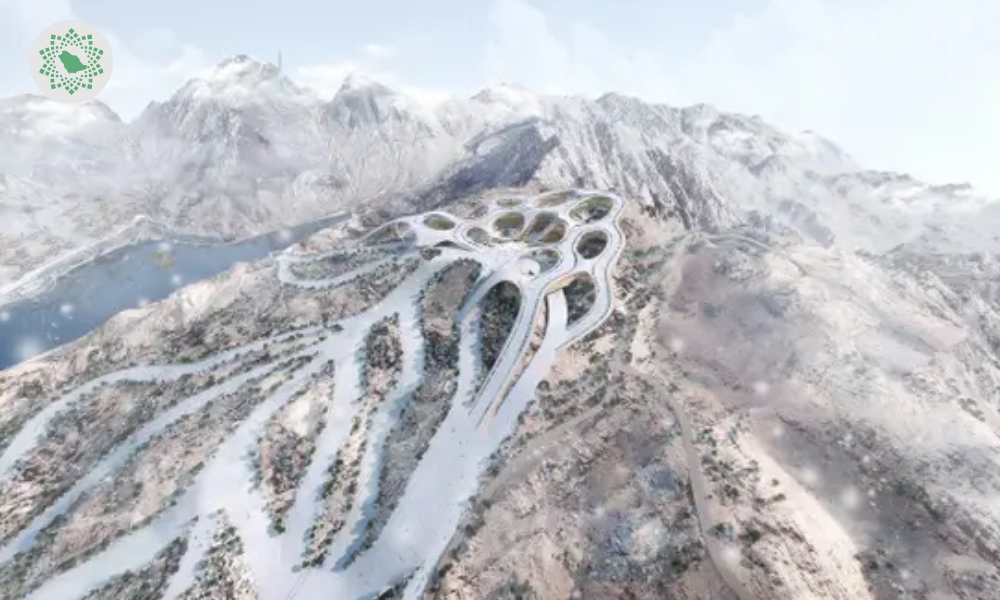
The announcement that Trojena, the mountain destination within NEOM projects, will host the 2029 Asian Winter Games sent shockwaves across the globe. The idea of hosting a major winter sports event in a region synonymous with searing heat and sand seemed a logistical and climatic impossibility. Yet, this ambition is not rooted in fantasy; it is anchored in a sophisticated, multi-layered approach to climate engineering and sustainable technology. Trojena’s strategy relies on a synergistic blend of natural geography, cutting-edge refrigeration, and stringent resource management.
The Geography That Enables the Dream
The first crucial factor is not technology, but natural terrain. Trojena is situated in the Sarawat Mountains, where elevations reach up to 2,600 meters above sea level. This high altitude is the fundamental enabler for the entire resort. Due to adiabatic cooling, temperatures at this elevation are naturally up to 10 degrees Celsius cooler than the coastal regions of NEOM, and they frequently dip below freezing point in the winter months (November to March).
This temperature differential is critical because it creates the necessary “window” for efficient snow production. The resort’s design further supports this by situating the main ski slopes on north and north-east facing slopes, minimizing exposure to direct, melting sunlight and maximizing the longevity of the snowpack. This strategic use of topography reduces the immense energy cost that would be required to maintain snow on sun-exposed, low-altitude terrain.
The Technology of Snow: A Two-Part System
The promise of year-round snow for skiing and the guarantee for the 2029 games require a highly engineered, two-part snow production system that goes far beyond traditional snow cannons:
1. High-Efficiency Snowmaking
During the naturally cold winter periods (when temperatures, particularly the wet bulb temperature, are favorable), Trojena uses advanced snow cannons. These systems are highly efficient, designed to produce high-quality, dense snow using compressed air and water.
2. Snow Factories (All-Weather Snowmaking)
To guarantee coverage outside of the naturally colder window and to secure the slopes for the Asian Winter Games, the master plan is expected to rely on specialized, enclosed refrigeration systems often dbbed “snow factories.” These units can produce snow regardless of the external temperature, ensuring consistent conditions even in marginal weather. While energy-intensive, these systems are a non-negotiable insurance policy against climate volatility, allowing NEOM initiatives to promise continuous alpine activities.
The Sustainability and Resource Challenge
The climate engineering in Trojena is inextricably linked to the sustainability mandate of the wider the NEOM. Creating and maintaining snow in an arid environment demands vast amounts of water and power, making resource management the single biggest operational challenge:
- Water Sourcing: The water required for snowmaking—estimated to be millions of cubic meters—is sourced primarily from desalinated sea water transported from the Gulf of Aqaba. To mitigate the energy intensity of desalination, the entire Trojena development, including snow production, is powered by 100% renewable energy sources, such as solar and wind, maintaining the Kingdom’s commitment to its sustainability goals.
- Water Recycling: A key component is the closed-loop system involving the man-made freshwater lake. The 2.8-kilometer-long lake is central to the Valley Cluster. It will serve not only as a destination for water sports but also as a reservoir, utilizing collected rainwater, treated wastewater, and snowmelt. All snowmelt will be captured and recycled back into the system for irrigation or re-use in snow production, demonstrating a commitment to circular resource management across all NEOM projects.
The Strategic Vision Beyond the Slopes
The successful execution of this climate-engineered environment is crucial because Trojena is designed as a year-round destination. While the ski slopes are the headline feature, the long-term viability and return on the multi-billion-dollar investment rely on the destination’s appeal outside of the three months of winter:
- Adventure Tourism: The mountain ranges offer hiking, mountain biking, and rock climbing across six distinct clusters
- Wellness and Retreats: The clean air and mountain views are leveraged for wellness resorts and luxury living spaces.
The ambitious environmental engineering ensures that the first of the major NEOM projects to be delivered will be a proof-of-concept a demonstration that extreme innovation, when backed by massive capital and state-of-the-art renewable energy infrastructure, can literally reshape the climate and geography of an entire region, cementing Saudi Arabia’s place as a global hub for technological and tourism innovation. The successful operation of NEOM projects in such a challenging environment will undoubtedly attract further foreign investment in the clean-tech sector.