

The vast oil fields beneath the sands of the Kingdom of Saudi Arabia are more than just an energy source; they are the foundation of its economic might and global influence. While the country is actively diversifying its economy through Vision 2030, maintaining the sustained productivity of these immense reservoirs remains a national imperative. This challenge isn’t about finding new oil; it’s about extracting every last economically viable drop from existing reserves—a process known as Enhanced Oil Recovery (EOR).
Within the suite of EOR techniques, one strategy stands out for its efficiency, versatility, and potential for sustainable integration: Water Alternating Gas (WAG). This technique represents a sophisticated evolution in reservoir management, moving beyond simple pressure maintenance to unlock significant remaining oil reserves.
The Challenge of Mature Fields
Initially, oil is recovered through natural reservoir pressure (primary recovery). As pressure declines, operators inject water (waterflooding) or gas (gas injection) to push the oil toward production wells (secondary recovery). However, these methods eventually hit a ceiling. A significant amount of oil—often 50% or more—remains trapped within the rock pores due to complex reservoir geology and the physical forces binding the oil.
This trapped oil is the target of EOR. While methods like chemical flooding are potent, they can be costly and complex. WAG offers an elegant middle ground, leveraging the strengths of both water and gas injection while mitigating their individual weaknesses.
How Water Alternating Gas (WAG) Works
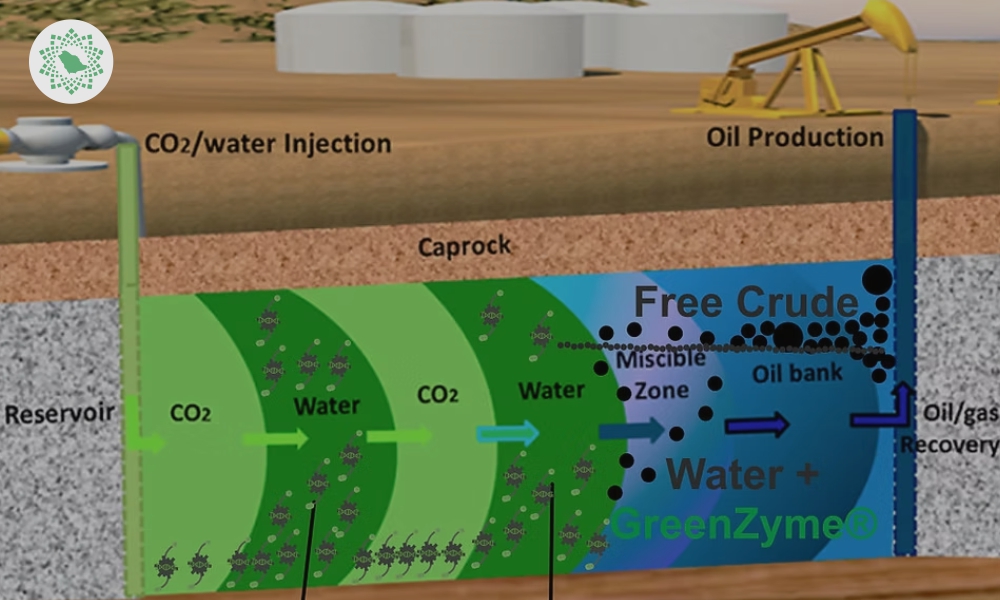
The brilliance of water alternating gas lies in its rhythmic simplicity and synergistic effect. Instead of continuously injecting just water or just gas, the WAG method involves injecting slugs (volumes) of water followed by slugs of gas, in a meticulously timed sequence.
- Water Slug: The injected water is effective at displacing oil and providing good sweep efficiency, pushing the oil across large areas of the reservoir toward the production wells. However, water is poor at mixing with the oil at the microscopic level and tends to bypass oil trapped in small pores.
- Gas Slug: The subsequent gas injection (often natural gas or sometimes CO₂) is crucial because it has better displacement efficiency. Gas is lighter and can mix with the oil, swelling it and lowering its viscosity, making it easier to flow. However, gas alone is prone to “fingering” or channeling through the reservoir without broadly sweeping the oil.
- Alternation: By injecting the two fluids alternately, WAG uses the water to control the mobility and movement of the gas, creating a more uniform front. The gas then mobilizes the hard-to-reach oil, which is subsequently “pushed” by the following slug of water. This rhythm ensures maximum contact between the injected fluids and the remaining oil, significantly boosting the overall recovery rate.This superior combination of sweep efficiency (provided by the water) and displacement efficiency (provided by the gas) is why water alternating gas has become a cornerstone EOR strategy in the Kingdom’s mature, yet immensely valuable, reservoirs.
The Saudi Strategic Advantage: Coupling WAG with CCUS
Saudi Arabia’s approach to water alternating gas is increasingly strategic, aligning economic imperatives with environmental goals. The Kingdom is actively pioneering the use of Carbon Capture, Utilization, and Storage (CCUS). By using captured CO₂ for WAG injection—known as CO₂-WAG—Aramco achieves a crucial dual benefit:
- Enhanced Oil Recovery: The CO₂ acts as a powerful solvent, mobilizing the crude oil far more effectively than traditional natural gas.
- Carbon Sequestration: A portion of the injected CO₂ remains permanently stored in the deep geological formation, effectively removing it from the atmosphere.
This coupling transforms a necessary industrial process (EOR) into a powerful tool for decarbonization, demonstrating the Kingdom’s commitment to the global Circular Carbon Economy (CCE) initiative. The massive scale of Saudi oil fields provides the ideal geological capacity for large-scale, cost-effective CCUS implementation alongside the cyclic injection process.
The Future of WAG and Digitalization
The successful implementation of enhanced sweep gas in complex Saudi reservoirs requires meticulous planning, high-fidelity reservoir modeling, and continuous optimization. To meet this technical challenge, the industry is increasingly turning to digitalization.
Advanced algorithms, AI, and machine learning are being deployed to monitor reservoir pressure, fluid movement, and production rates in real-time. This allows engineers to dynamically adjust the WAG cycle ratio—the number of water slugs versus gas slugs—to respond to subtle changes in the subsurface, ensuring every single drop of injected fluid is used as efficiently as possible.
Conclusion
This smart approach to water alternating gas minimizes resource consumption (both water and gas) while maximizing the economic return, reinforcing the Kingdom’s leadership in sustainable, high-tech petroleum engineering.
In summary, WAG is far more than an injection method; it is a critical component of the Kingdom’s long-term energy strategy. It ensures the longevity of its primary resource base while simultaneously pioneering solutions for a cleaner energy future through efficient resource use and carbon management