
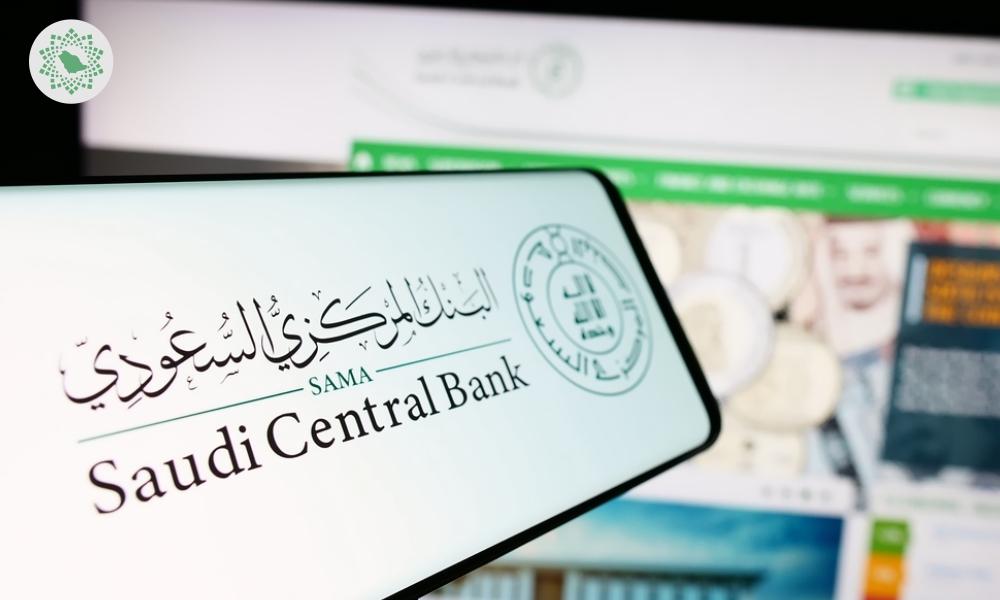
Saudi Arabia’s central bank has taken a proactive step to shore up monetary stability by raising its two key interest rates by 25 basis points, moving ahead of an anticipated rate hike by the U.S. Federal Reserve. The decision, announced on Thursday, signals the kingdom’s intent to keep domestic money markets aligned with global conditions and avoid pressures that could prompt capital to flow out of the country.
The Saudi Central Bank increased its repo rate, the rate at which it lends to commercial banks, to 2.25%, while lifting the reverse repo rate, which governs deposits from banks, to 1.75%. What stood out to market observers was the timing. Saudi Arabia typically adjusts its rates after the U.S. Federal Reserve acts, reflecting the riyal’s peg to the dollar. This time, however, the move came nearly a week before the Fed’s upcoming policy meeting, where a quarter-point rate increase is widely expected.
In a brief statement, the central bank said the decision was “consistent with monetary stability in the evolving domestic and international monetary conditions.” While officials offered little additional guidance, bankers in the kingdom believe the underlying motivation is clear: preventing Saudi interest rates from slipping too far below U.S. levels.
In recent months, Saudi short-term money rates have been under downward pressure. A slower domestic economy has reduced demand for loans, while the government’s increased borrowing overseas has eased the need to tap local markets. As a result, the gap between Saudi and U.S. rates has narrowed sharply. On Thursday, the three-month Saudi interbank offered rate fell 13 basis points below its U.S. dollar equivalent the lowest spread since mid-2009, during the global financial crisis. By contrast, at the end of 2016, Saudi rates were more than a full percentage point higher than those in the U.S.
A sustained negative spread raises concerns for policymakers, as it could encourage investors to seek higher returns abroad at a time when the government is focused on mobilizing capital for domestic investment and economic diversification projects.
Notably, this marks the first time in several years that the central bank has raised its repo rate. During earlier tightening cycles since late 2015, it had only adjusted the reverse repo rate, a more measured approach that limited upward pressure on money market rates.
Earlier this month, the central bank also signaled its intent to tighten liquidity conditions by discontinuing longer-term repurchase agreements, further underscoring its determination to keep Saudi rates closely aligned with global benchmarks.